In 1594, a group of 67 local inhabitants secured ownership of meadowland that would become the foundation of England's longest-running community land trust. Four centuries later, that same trust continues to defend public access to nearly 500 acres of Hemel Hempstead's open spaces.
The Secret Purchase of 1581
The story begins not in 1594, but thirteen years earlier. On 26 May 1581, three local men, yeomen John Rolfe and William Gladman together with landlord and shoemaker Richard Pope, completed a purchase of lands from Richard Grey for £75. The funds had been raised through a secret public subscription, a clandestine effort to prevent the Earl of Leicester's estate from enclosing the meadows.
The transaction was no small matter for the period. Enclosure was transforming the English landscape, turning communally used fields into private property. For the ordinary residents of Hemel Hempstead and the neighbouring parish of Bovingdon, losing access to these meadows would have meant losing grazing rights, foraging grounds, and the open spaces that formed the economic and social fabric of their communities.
The Trust Is Born
In 1594, ownership was formally transferred to 67 local inhabitants, who became feoffees, or trustees. The legal document establishing what would become the Box Moor Trust stated that "their heirs and assigns might and should for ever thereafter have, hold and enjoy the said meadows and all the commodities that might or should arise thereof."
This arrangement created something remarkable: a charitable trust owned by the community, for the community. It is now recognised as one of England's oldest continuously operating charitable trusts, predating the National Trust by more than three centuries.
The trust's legal standing was reinforced by the Boxmoor Act 1809, which received Royal Assent on 20 May 1809. This Act of Parliament formalised the trust's governance structure and remains the principal legislation under which it operates today.
Centuries of Encroachment
The 430 years since the trust's foundation have not been peaceful. Every major transportation project in the region has required land from the trust's estate. In 1797, parcels were sold to the Grand Junction Canal Company for canal construction; the proceeds funded the construction of Boxmoor Wharf. In 1837, the London and Birmingham Railway purchased a corridor of land, paying £85 per acre when the trustees had requested £130. The shortfall notwithstanding, the funds were used to purchase Blackbirds Moor, expanding the estate.
Further encroachments came in 1870, when the trust received £2,000 for land used for the Nickey Line railway. In the 1990s, construction of the A41 Bypass resulted in a land exchange that saw the trust acquire Gee's Meadow and Further Roughdown. Each transaction reduced the estate, yet the trustees consistently reinvested proceeds in acquiring new parcels, adapting the trust's boundaries while preserving its core purpose.
The Modern Battle: 2019–2020
The most recent threat emerged in 2019, when the trust applied to deregister five small parcels of common land at Dellfield. Deregistration would have removed the legal protections afforded to common land, potentially enabling development. The attempt failed. In November 2020, the trust announced that the deregistration plans had been abandoned, meaning the common land protections remained firmly in place.
The episode demonstrated that the same pressures facing the trust in the 16th century, enclosure and development, remain active today. What began as resistance to a 16th-century Earl's estate continues as resistance to 21st-century development pressures.
What the Trust Holds Today
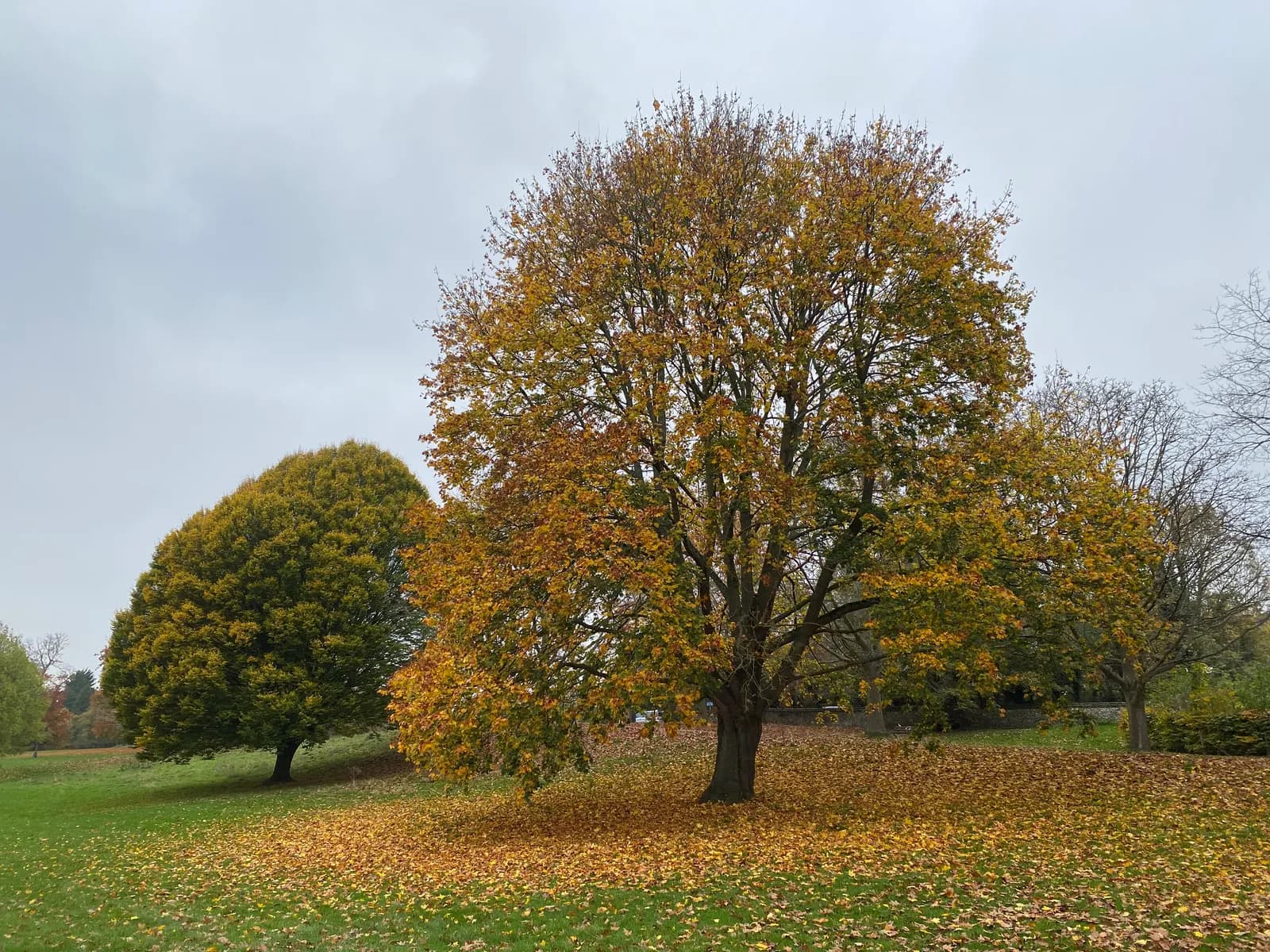
The Box Moor Trust now manages nearly 500 acres across Hemel Hempstead and Bovingdon. Just over a quarter of this estate is registered common land, protected under the Commons Registration Act 1965, the Countryside and Rights of Way Act 2000, and the Commons Act 2006. Key parcels include Blackbirds Moor, Roughdown Common, Harding's Moor, Station Moor, Sheethanger Common, and Gee's Meadow.
Roughdown Common holds particular significance. A former chalk quarry purchased by the trust in 1886, it was designated a Site of Special Scientific Interest in 1953. It is one of Hertfordshire's few remaining examples of unimproved calcareous grassland, supporting rare plant species that have vanished from much of the surrounding landscape.
More recent acquisitions have expanded the trust's holdings. Westbrook, comprising 167 acres, was purchased in 1994 to mark the trust's 400th anniversary. Bovingdon Brickworks, 36 acres, followed in January 2000. Pixie's Mere, a four-acre fishing lake, was added in 2003, and Gadespring, a former four-acre watercress farm, in 2011.
Governance and Grazing
The trust operates under a democratic model that would have been radical in 1594 and remains noteworthy today. A board of 12 trustees is elected by the trust's beneficiaries, defined as residents of Hemel Hempstead and Bovingdon who appear on the electoral roll. This structure ensures that control of the land remains with the local community rather than distant institutions.
Traditional uses continue alongside modern conservation. The trust maintains a herd of Belted Galloway cattle and flocks of sheep, including Charollais, Norfolk Horns, and Ryelands. Grazing is not merely historical pageantry; it is essential management for the calcareous grassland habitats that make Roughdown Common scientifically significant.
Ecological Recovery
In recent years, the trust has moved from passive preservation to active ecological restoration. In September 2019, 177 water voles were reintroduced to the River Bulbourne as part of a three-year plan. The animals, once common throughout English rivers, had been driven to local extinction by habitat loss and predation. The reintroduction represents a reversal: land preserved from 16th-century enclosure is now being used to repair 20th-century ecological damage.
A major river restoration project on the Bulbourne, undertaken in January 2017 in partnership with the Environment Agency, has reinstated natural meanders and flow patterns. The work demonstrates how the trust's long-term land security enables conservation projects that require decades, not years, to bear fruit.
The Local Context
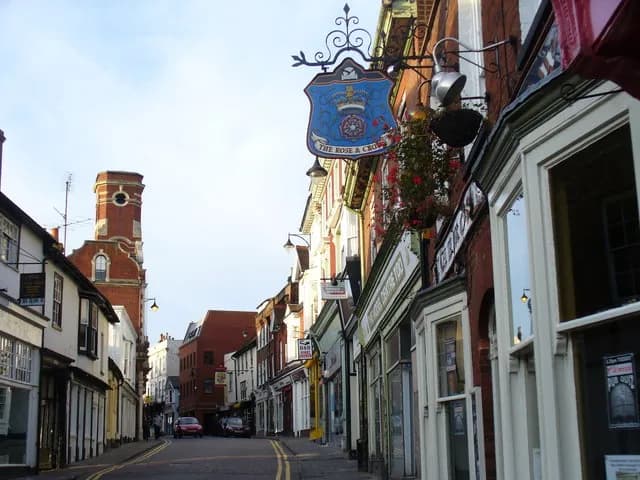
The significance of the Box Moor Trust extends beyond its boundaries. Hemel Hempstead is a town transformed by post-war development, designated a New Town in 1946 and subsequently expanded to absorb surrounding villages. In this context, the trust's 500 acres represent a continuous thread connecting modern Hemel to its pre-urban past.
Gadebridge Park, the 32-hectare urban park managed by Dacorum Borough Council, sits adjacent to trust lands. It contains its own historic layers: the Grade II listed Charter Tower, reputedly from where Henry VIII granted Hemel Hempstead its market charter in 1539; a Roman villa, designated a scheduled ancient monument; and a Grade II listed bridge over the River Gade. The park and the trust's lands together form a historic landscape that predates the New Town by millennia.
What the 430 Years Represent
The Box Moor Trust's 430-year history is not simply a local curiosity. It represents one of the most enduring examples of community resistance to enclosure in English history. The trust has survived the enclosure movement, the Industrial Revolution, the expansion of Hemel Hempstead as a New Town, and the development pressures of the 21st century.
Its governance model, community trustees elected by local residents, anticipated modern democratic land management by centuries. Its ecological holdings, particularly Roughdown Common, have preserved habitats that would otherwise have been lost to intensive agriculture or urban development. Its recent conservation projects, from water vole reintroduction to river restoration, show that the trust is not merely a historical relic but an active environmental actor.
The fight that began in 1581 with a secret subscription to prevent enclosure, and was formalised in 1594 with the creation of the trust, continues. The methods have changed; the principle has not. The land remains common.