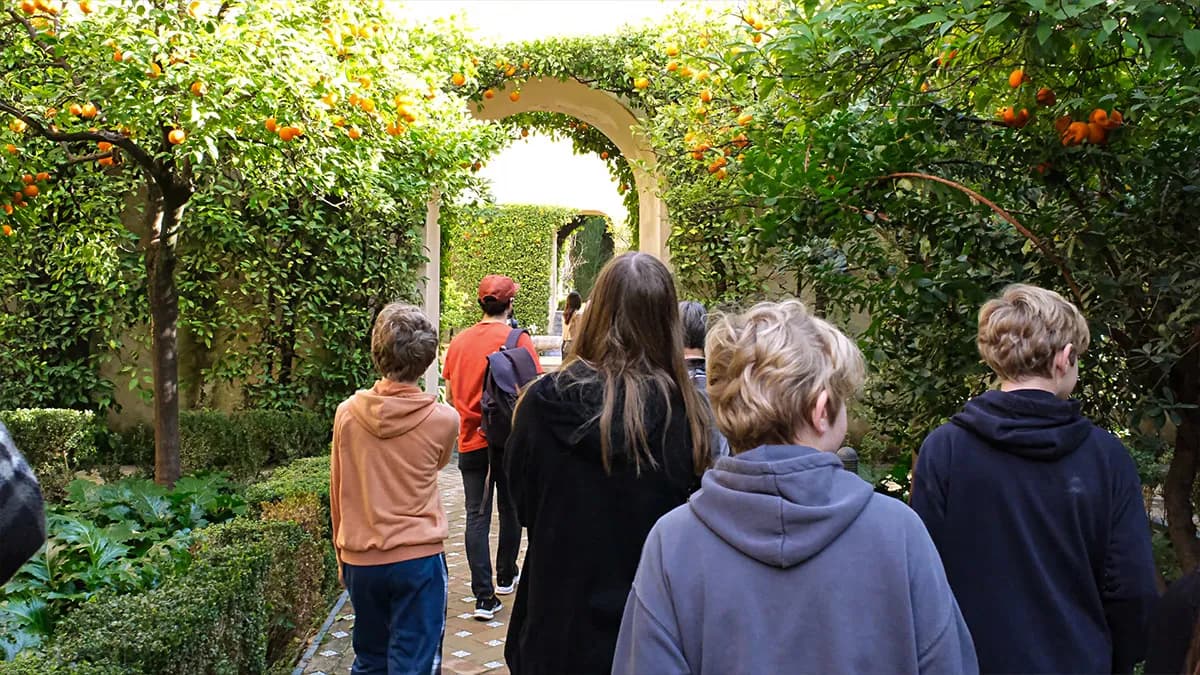
Marie Towns, Educational Visits Coordinator at St Edmund's College in Ware, explains how school trips build confidence and broaden pupils' horizons.
When Marie Towns first became an Educational Visits Coordinator (EVC), she saw the role largely in practical terms: making sure risk assessments were completed, learning objectives were clear, and transport, budgets and safety arrangements were in place.
Over time, however, watching pupils respond to experiences outside the classroom changed her perspective.
Seeing Pupils Come to Life
Marie, now an EVC at St Edmund's College, said:
But over the years I've kind of seen it as very, very different. And [trips are] where all the children really come to life and they really show us who they are.
The most valuable part of a visit is often the experience itself: the moment when pupils encounter something they could never have discovered from a textbook or worksheet.
During one trip to Norway, a pupil saw a glacier for the first time and turned to Marie:
I didn't realise the world was like this.
The comment stayed with her.
Marie recalls:
They just thought it was like their little community around their school, and they didn't realise that you could walk on a glacier in Norway.
For Marie, moments like these demonstrate how educational visits can broaden pupils' horizons, introducing them to places, people and experiences beyond the environments they know.
Planning Ahead
Creating those experiences takes careful planning behind the scenes.
At St Edmund's College, the school looks around 18 months ahead, gathering ideas from staff before considering costs, providers and dates. Giving families plenty of notice also allows more time to plan for the financial commitment involved.
Coordination can make a difference, too. Without it, pupils can end up having to choose between trips simply because they are scheduled at the same time.
Marie says:
One thing we've noticed is trips aren't competing for each other. So the same kid might go on a lot of trips, but if you don't coordinate when trips are going out, a kid could miss out on a trip because they want to go on both.
A Community Effort
The Educational Visits Coordinator role involves a wide range of considerations, but Marie believes responsibility for getting things right should not rest with one person.
Safeguarding, learning support, finance, senior leadership and teaching staff can all bring different knowledge to the planning process, from identifying a pupil's individual needs to finding ways to make a trip more affordable or accessible.
Marie says:
If it's just one person, it's very difficult for them to solve all the problems. And it shouldn't be that person. It should be a community getting together, as a collaborative group.
Learning Across Subjects
It's also important to make a trip cross-curricular. Marie says:
We try not to make a trip one subject.
A visit to a zoo, for example, could bring together biology, geography and environmental studies, while also creating opportunities to explore culture, communication and personal development. A historical visit might inspire art, while unfamiliar environments can encourage empathy, independence and confidence.
The learning does not necessarily end when pupils return to school. Taking time to evaluate a visit can help staff understand what worked, what could be improved and what impact the experience had.
She says:
It's something that gets forgotten because you come back the trip and you're like, oh, thank goodness I can have a rest.
Memories That Last
For all the planning involved, it is often the simplest experiences that stay with pupils long after the paperwork has been filed away.
Marie says:
We don't remember from school what our favourite worksheet was. But I bet we can remember our favourite journey, our favourite trip or an experience we had.
Those memories might be of a place, a new friendship, something tasted for the first time or simply the moment a pupil stepped outside their comfort zone and realised they could do it.
Marie says:
Those are the moments that make staff and students feel excited. It might make them a little bit nervous out their comfort zone, but they overcome it. And they'll feel so proud of themselves. They will get so much more out of a trip, because that classroom door is opened to a world they probably have never seen.